
Starting golf can feel like joining a club where everyone already knows a secret handshake. The good news? It is far simpler than it looks, and you do not need shiny new clubs, a handicap or any prior experience to play your first round. This beginner’s guide to golf walks you through the essentials — etiquette, the basic rules, what to pack, how to keep a good pace, what to wear and how booking a tee time really works. By the end, you will be ready to step onto the first tee with a smile rather than a knot in your stomach.
Why a short 9-hole course is perfect to start
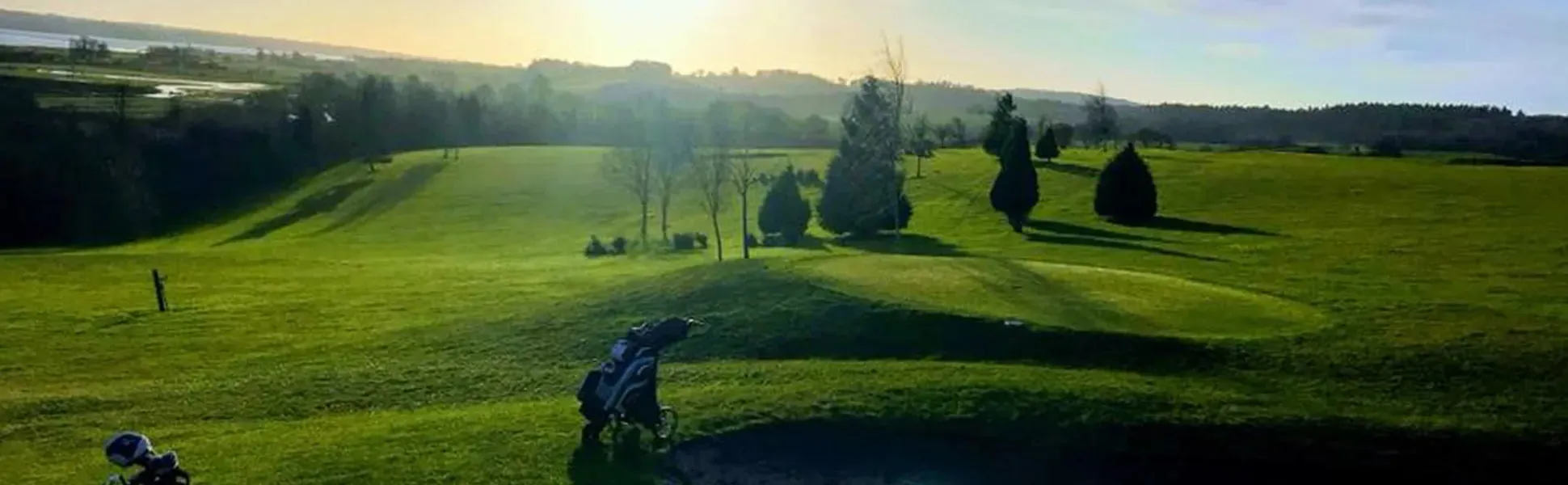
For newcomers, an 18-hole championship layout can be daunting: long carries, four-and-a-half-hour rounds and plenty of room to lose both balls and confidence. A friendly 9-hole course is a gentler introduction, and Exminster is a great example. Set in 55 acres above the Exe Estuary, it plays to a par of 66 across 18 tee positions, with the red tees at just 4,574 yards. You can play nine holes in around an hour and a half, learn the ropes at a relaxed pace and still enjoy genuine variety — including a pretty signature par-3 4th played over a pond.
Because the course sits on free-draining soil, it stays playable all year, even when wetter courses nearby are waterlogged. That means more chances to get out and practise while you find your feet.
How pay & play works (no membership needed)
One of the biggest myths about golf is that you must join a club to play. You do not. Exminster is a pay & play venue, which simply means you pay a green fee for your round and away you go — no membership, no joining fee, no commitment. Current green fees are £24 for 9 holes or £48 for 18 holes; you can see the full breakdown on the green fees page.
If you would rather warm up first, the driving range has 16 floodlit bays (14 covered) — a low-pressure spot to hit a basket of balls and groove your swing.
Booking your first tee time
A “tee time” is just your reserved slot to start. Booking ahead guarantees your spot and helps the course manage the flow of players. You can book a tee time online through BRS Golf, or call the team on 01392 833 838 if you would prefer to talk it through. Aim to arrive 15–20 minutes early to park (parking is free), check in at the pro shop and take a few practice swings.
What to bring
You do not need a full set to begin. A starter selection is plenty:
| Item | Why you need it |
|---|---|
| A few clubs | A driver or hybrid, a couple of irons, a wedge and a putter cover most shots |
| Golf balls | Bring at least half a dozen — beginners lose a few, and that is fine |
| Tees | Small pegs to raise the ball for the first shot of each hole |
| A glove | Worn on your lead hand for grip; optional but helpful |
| Water & snacks | Nine holes is a decent walk |
| Waterproofs | Devon weather can turn quickly |
No clubs of your own? The pro shop offers club hire, so you can try the game before investing, and the team can point you towards the right gear when you are ready to buy.
What to wear
Golf has relaxed its dress code over the years, but a smart-casual standard still applies on the course. As a simple rule:
- Do wear: a collared polo shirt or smart top, tailored shorts or trousers, and trainers or golf shoes.
- Avoid: football shirts, vests, denim jeans and gym shorts.
Soft-spiked golf shoes give the best grip, but clean trainers are fine for beginners. Layers are your friend — estuary breezes can feel cool even on a bright day.
Pace of play: the unwritten essential
Nothing marks you out as a considerate playing partner more than keeping up. You are not expected to play quickly or well — just to be ready. A few habits make all the difference:
- Be ready to hit when it is your turn — choose your club while others play.
- If you are holding up the group behind and there is space ahead, wave them through.
- Limit your search for a lost ball to about three minutes, then drop a new one and play on.
- Keep walking between shots rather than dawdling back to the bag.
Golf etiquette in a nutshell
Etiquette is really just good manners translated to a golf course. Master these and you will fit right in:
- Stay still and quiet while someone else is swinging.
- Mind your shadow — keep it off another player’s putting line.
- Shout “Fore!” loudly if your ball flies towards anyone; it is the universal warning.
- Repair the course — replace divots, rake bunkers and fix pitch marks on the green.
- Let faster groups through when you can.
- Phones on silent, and save the chat for between shots.
The basic rules you actually need
The full rulebook is long, but these few cover almost everything for your first round:
- Play the ball as it lies wherever possible — do not move or improve it.
- Count every shot, including any swings and misses (we have all been there).
- Out of bounds (often marked by white stakes — like the left of Exminster’s tough par-5 8th) means a penalty stroke and replaying from where you last hit.
- Lost ball or water hazard: add a penalty stroke and play on; do not let it spoil your fun.
- Pick up if you must — many beginners simply lift the ball after a set maximum on a hole. It keeps the round enjoyable and the pace flowing.
Give yourself a head start with a lesson
You can absolutely learn as you go, but an hour with a professional shortcuts months of frustration. PGA Head Professional James Taverner offers golf lessons from £50 an hour, covering grip, posture and the fundamentals that make the game click. There is also a Wednesday Ladies Refresher session and a new indoor “Golf Garage Swing Room” studio for year-round coaching. Even one session before your first round makes the whole experience more rewarding.
Golf is one of the few sports you can genuinely enjoy for life, at any age and ability. Take the pressure off, expect a few wayward shots and focus on the fresh air, the company and the satisfaction of that one perfect strike that keeps everyone coming back. When you are ready, book your tee time and we will see you on the first tee.