
Devon winters are rarely about snow. The challenge here is rain, and lots of it. From November through March, the question for keen golfers is not whether they want to play, but whether the course will let them. Some venues turn into bogs after a heavy front rolls in off the Atlantic; others shrug it off and play beautifully. Understanding the difference is the key to a good winter of golf.
This guide explains why some courses close while others stay open, what to wear when the forecast looks grim, how winter rules actually work, and why our hilltop course above the Exe Estuary stays open all year round.
Why some courses close and others don’t
The single biggest factor in winter golf is drainage, and drainage comes down to two things: soil type and topography.
Courses built on heavy clay or low-lying flood plains struggle badly in winter. Clay holds water like a sponge, so after sustained rain the fairways become saturated, casual water pools on the greens, and the ground simply cannot absorb any more. To protect the turf from damage, these clubs are forced to close holes, move players onto temporary greens, ban trolleys, or shut the course entirely.
Free-draining courses are a different proposition. Built on sand, gravel or well-structured loam, and often raised above the surrounding land, they let water pass straight through rather than holding it on the surface. This is why traditional links courses on the Devon coast play so well in winter, and why a number of inland resorts have invested heavily in drainage to guarantee year-round golf.
| Course type | Winter behaviour |
|---|---|
| Heavy clay, low-lying | Floods quickly; temporary greens, trolley bans, closures |
| Parkland with mixed soil | Variable; often soft, cart paths only |
| Free-draining / links | Drains fast; stays open and firm underfoot |
| Free-draining on a hill | Best of all — water sheds off and drains through |
The common thread is always the same: water needs somewhere to go.
Why Exminster stays open all year
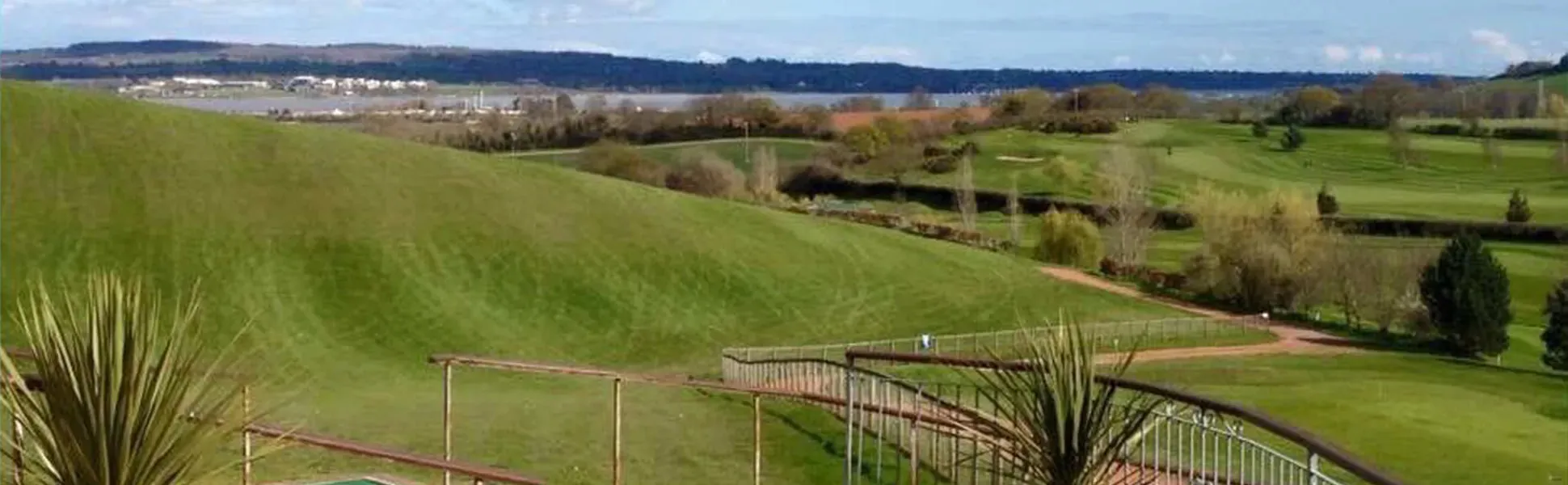
Exminster Golf Centre sits on Exminster Hill, 55 acres of elevated ground overlooking the Exe Estuary. Two features make it one of the most reliable winter venues in the Exeter area.
First, the soil is naturally free-draining, so rain filters away rather than sitting on the surface. Second, the course is on a hill, which means water sheds downhill and never has the chance to pool the way it does on flat, low ground. The result is a course that stays playable on full greens when other venues nearby are waterlogged and shut.
That matters for more than just comfort. Playing on proper greens all winter keeps your putting sharp, lets you post handicap scores, and means a round actually resembles the golf you play in summer. You can book a tee time online right through the colder months, with simple pay-and-play green fees of £24 for 9 holes or £48 for 18 — no membership required. If you play often, a membership can quickly pay for itself.
When the weather is genuinely wild, the floodlit covered driving range is the perfect fallback. With 16 bays, 14 of them under cover and lit into the evening, you can keep grooving your swing in the dry while the rain hammers down outside. Winter is also a smart time to book a lesson with our PGA professional and iron out a fault before the spring.
What to wear for winter golf
Staying warm and dry is what separates a miserable round from an enjoyable one. The trick is layering rather than one bulky coat that restricts your swing.
- Base layer: a thermal or technical base under your shirt traps heat without bulk.
- Mid layer: a half-zip or sweater you can shed if the sun appears.
- Waterproofs: a breathable waterproof jacket and trousers are non-negotiable in Devon. Keep them in the bag even on a dry-looking morning.
- Hands and head: winter mittens or rain gloves, plus a beanie. A bobble hat does more for your scorecard than you’d think.
- Footwear: waterproof shoes with good grip; spikes help on softer ground.
- Towels and a brolly: pack a spare dry towel inside your bag and a large umbrella.
A flask of something hot never goes amiss either. If you find yourself short of kit, the pro shop can sort you out before you head to the first tee.
Winter rules explained
When the ground is soft, most clubs introduce preferred lies, often called winter rules or “lift, clean and place”. Under England Golf’s Model Local Rule E-3, where a ball lies in a closely mown area — essentially anywhere cut to fairway height — you may mark it, lift it, clean it, and replace it within a set distance, usually six inches (15cm), without penalty.
A few points worth remembering:
- Preferred lies only apply in closely mown areas, not in the rough.
- You must mark the ball’s original position before lifting it.
- Replace it within the stated distance, no nearer the hole.
- Clubs can apply E-3 all year and scores still count for handicap purposes, so winter rounds need not be wasted.
Always check the local rules board or ask in the pro shop on the day, as the exact distance and conditions vary from course to course. Other common winter measures include trolley restrictions, the temporary removal of bunker rakes, and grass tees being rested in favour of mats — all designed to protect the course so it recovers well for spring.
Make the most of the off-season
Winter is the ideal time to work on your game without the crowds. Quieter tee sheets, cooler conditions and a course that holds up to the weather all add up to genuine improvement by April. Whether you fancy a brisk nine before lunch or a session under the floodlights, there’s no reason to put the clubs away in Devon.
Got a question about conditions or want to plan a winter visit? Get in touch and we’ll happily point you in the right direction.
Sources: Manor & Ashbury Resorts, Golf in Devon, England Golf preferred lies — National Club Golfer, The R&A Winter Rules FAQs.